
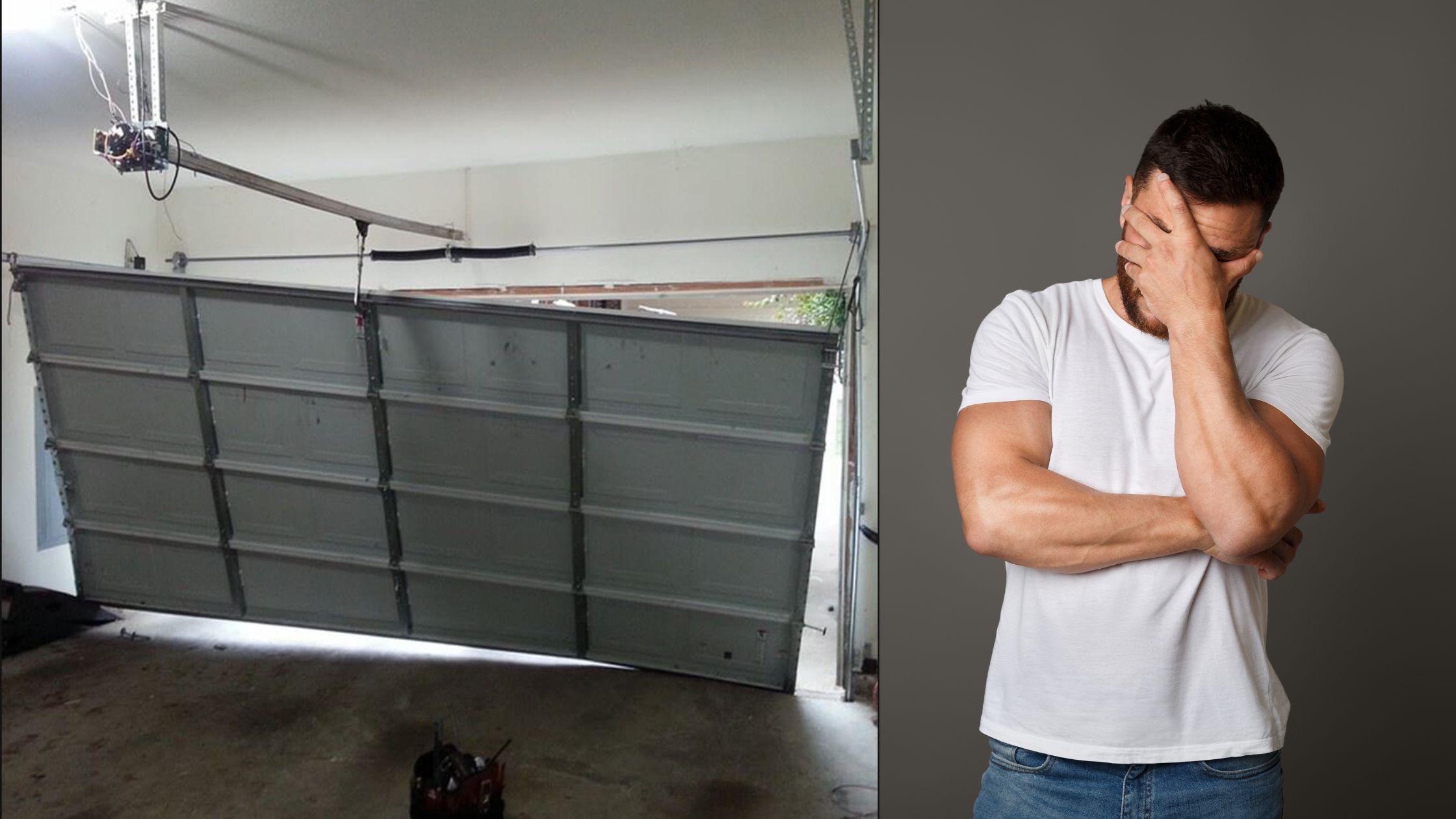

What to Do If Your Garage Door Comes Off Track
A garage door that’s come off track is one of those problems that looks a lot scarier than it usually is — and also one that’s genuinely dangerous to handle incorrectly. If your door is hanging at an angle, stuck partway, or visibly separated from its guide rails, here’s what’s actually happening, what you should and shouldn’t do, and what garage door off track repair typically involves.
How to Tell If Your Garage Door Is Off Track
A door that’s come off track usually announces itself pretty clearly, but the signs can vary depending on how severe the issue is:
The door is visibly crooked or tilted. If one side of the door is higher than the other, or the whole door looks like it’s hanging at an angle, one or more rollers have likely popped out of the track.
You can see a gap between the roller and the track. Look closely at the tracks running vertically along either side of the door opening. If a roller is sitting outside the track rather than inside it, that’s a clear sign of the problem.
The door makes grinding or scraping noises. A door that’s partially off track will often bind against the track edges or hardware, creating noise that wasn’t there before.
The door won’t move at all, or moves only partway. Depending on how far off track the door has come, the opener may stop entirely, sensing resistance it can’t overcome.
You notice a bent or dented track. Sometimes the track itself is damaged rather than just the rollers, which usually means something impacted the door or track directly.
What Causes a Garage Door to Come Off Track
A handful of common issues lead to this problem, and identifying the cause matters for getting it fixed correctly rather than just temporarily.
Worn or broken rollers. Rollers wear out over time, especially on doors that get frequent daily use. A cracked or badly worn roller can slip out of the track during normal operation.
Bent tracks. Tracks can bend from vehicle impact, an object falling against them, or simply years of minor stress. Even a small bend can be enough to throw a roller off course.
Loose track hardware. The brackets holding the tracks in place can loosen over time, especially in homes with heavy daily door use. A loose track shifts slightly with each cycle, gradually increasing the chance that a roller jumps free.
A broken cable or spring. If a cable snaps or a spring breaks, the door can shift unevenly as it loses proper support, which sometimes pulls it off track in the process. If this is the underlying cause, the track issue is really a symptom of a bigger problem — one we cover in more detail in our guide on what to do when a garage door spring breaks.
Impact damage. A vehicle, ladder, or other object striking the track directly can knock it out of alignment immediately, rather than through gradual wear.
Do Not Try to Force the Door
This is the most important thing to understand about an off-track door: it is not safe to operate, manually or with the opener. A door that’s partially off track can be more unstable than it looks — pushing or pulling on it, or continuing to run the opener, can cause the door to fall unexpectedly or come off the track entirely on the other side as well.
If the door is stuck partway open or closed, leave it where it is. Disconnect the opener if you’re able to do so safely by pulling the emergency release cord, but don’t attempt to manually force the door up or down afterward if it’s already showing signs of being off track. Keep the area clear, especially children and pets, until a technician has assessed it.
Can You Fix an Off-Track Garage Door Yourself?
A very minor case — a single roller that’s just barely slipped and the door is otherwise stable — is sometimes something a confident homeowner can carefully guide back into place. But in most cases, we don’t recommend attempting this yourself, for a few reasons.
First, it’s often hard to tell from the outside whether the issue is a simple roller slip or something more serious, like a bent track or a spring problem contributing to the imbalance. Second, doors are heavy, and working near an unstable door — especially one still connected to spring tension — carries real injury risk. The U.S. Consumer Product Safety Commission lists garage door systems among the more common sources of serious home equipment injuries, and an off-track door combines several of the riskier failure points at once.
If you’re uncertain at all, it’s worth having a professional take a look rather than risking further damage or injury.
What the Repair Process Looks Like
When we respond to an off-track door call, the first step is figuring out exactly why it happened — not just popping the roller back into the track, which can be a temporary fix that fails again quickly if the underlying cause isn’t addressed.
If the issue is a worn or damaged roller, we’ll replace it and check the rest of the rollers for similar wear, since they tend to age at a similar rate. If a track is bent, we’ll assess whether it can be straightened and re-secured or whether it needs to be replaced outright — a track that’s been significantly bent rarely holds its alignment reliably even after straightening. If loose hardware is the culprit, we’ll re-secure the brackets and check the rest of the track run for similar looseness.
If the root cause turns out to be a failing cable or spring, we’ll address that at the same time, since sending you off with a re-tracked door on a failing spring just sets up the same problem to happen again soon. Our guide on garage door cable repair covers how cables and tracks often fail together.
How Much Does Off-Track Repair Cost?
Cost depends heavily on what actually caused the problem. A simple roller replacement is one of the more affordable repairs we do. A bent track that needs straightening costs a bit more, and a track that needs full replacement is the higher end of the range, particularly if both side tracks are affected. If a broken cable or spring caused the issue, that repair gets factored in separately.
We always inspect the full system and give you a written estimate before starting any work, so you know exactly what you’re paying for and why.
Preventing Off-Track Problems
Regular maintenance is the best defense against this particular failure. Rollers that are lubricated annually wear more evenly and are less likely to crack or slip. Having your door professionally inspected once a year also catches loose hardware and minor track misalignment before it becomes a full off-track situation. If your door has recently taken any kind of impact — even a minor bump from a car or a ladder — it’s worth having the tracks checked even if the door still seems to be operating normally, since minor bends can worsen gradually with continued use.
Get Fast, Professional Off-Track Repair
Our team handles off-track garage door repair across San Antonio, Helotes, and the surrounding Hill Country. Whether the cause is a worn roller, a bent track, or a bigger issue underneath it, we’ll diagnose it correctly the first time rather than just pushing the door back into place. Our full range of residential garage door services covers tracks, rollers, cables, springs, and openers, so most issues can be resolved in a single visit.
If your door has come off track, don’t try to force it. Contact us here for a free estimate, or call directly for the fastest response.
Frequently Asked Questions: Garage Door Off Track Repair
Is it safe to open a garage door that’s off track?
No. A door that’s partially off track can be unstable, and forcing it to open or close — manually or with the opener — risks the door falling or coming off the track entirely. Leave it in place and call for professional repair.
How much does it cost to fix a garage door that’s off track?
It depends on the cause. A single worn roller is one of the more affordable repairs. A bent or damaged track costs more, especially if it needs full replacement. We provide a written estimate after inspecting the door so you know the exact cost before any work begins.
Can a garage door go back on track by itself?
No, and attempting to force it back into place without addressing the underlying cause often leads to it happening again quickly, or causes further damage. Professional repair identifies why it came off track in the first place.
What causes a garage door to come off track?
The most common causes are worn or broken rollers, bent tracks, loose track hardware, or a failing cable or spring that throws the door off balance. Impact damage from a vehicle or object can also knock a track out of alignment immediately.
Can I push my garage door back onto the track myself?
We don’t recommend it. Even a door that looks only slightly off track can be unstable, and working near it carries real injury risk, especially if a spring or cable issue is contributing to the problem. It’s best left to a professional.
How quickly can you repair an off-track garage door in San Antonio?
We prioritize off-track calls since the door is generally unusable and potentially unsafe in that state. In most cases we can respond and complete the repair the same day.

