
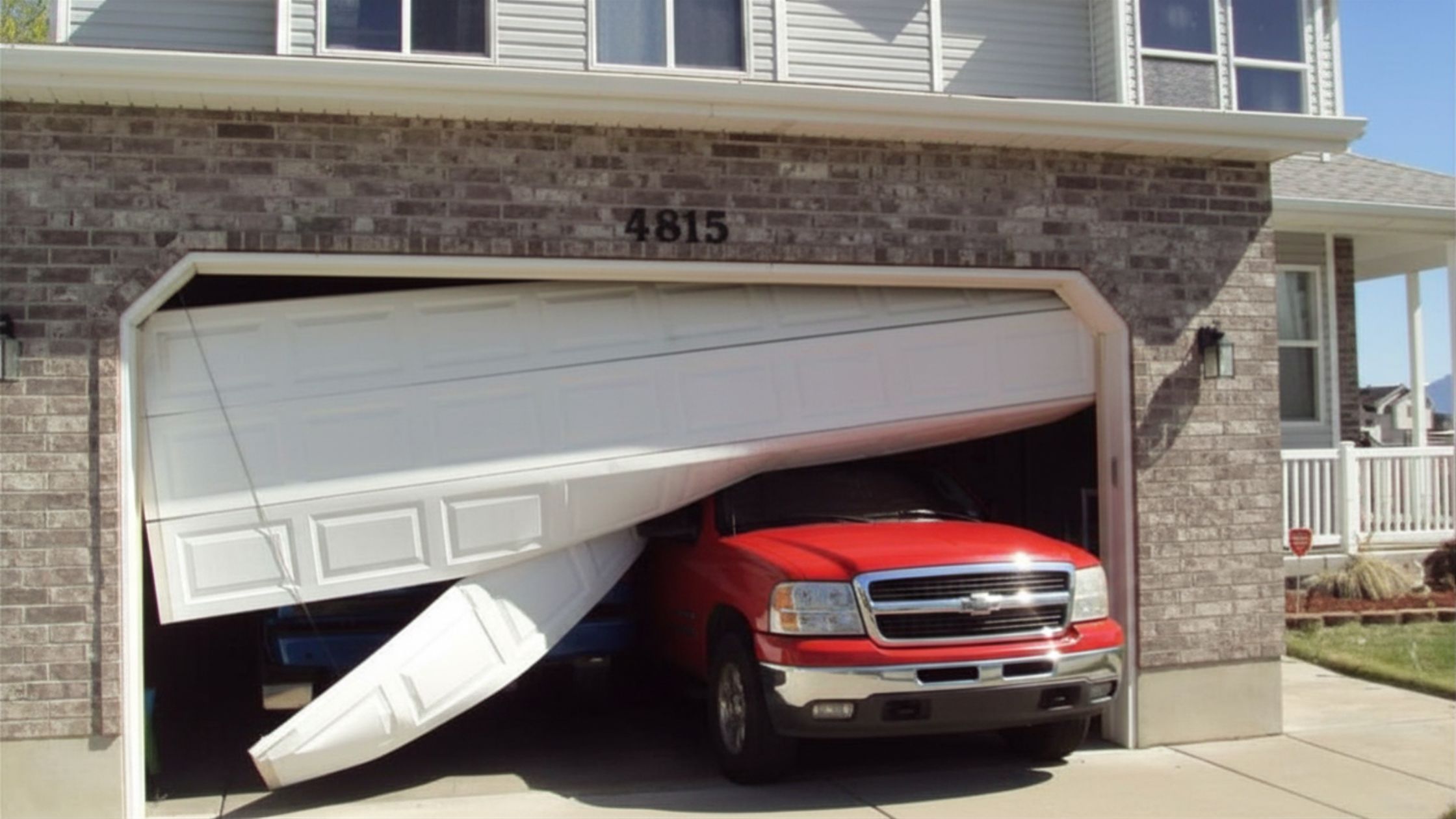

My Garage Door Was Hit by a Car — Now What? A San Antonio Homeowner’s Guide
It happens more often than you’d think. You pull into the driveway a little too fast, a family member misjudges the clearance, or someone backs out without checking — and suddenly you’re staring at a dented, cracked, or completely buckled garage door. If your garage door was hit by a car in San Antonio, here’s exactly what to do next, what it’s likely going to cost, and how to figure out whether your insurance will cover it.
Step One: Stop Using the Door Immediately
This is the most important thing to do right after a vehicle impact, and it’s the step most homeowners skip. A garage door that’s been hit by a car may look like it’s mostly fine — maybe just a dented panel — but the impact can bend tracks, shift the door off its alignment, or damage springs and cables in ways that aren’t immediately visible.
Forcing a misaligned or structurally compromised door to open or close risks making the damage significantly worse, jamming the door permanently in the open position, or causing the door to fall. If the door is currently closed, leave it closed. If it’s open and won’t close, don’t force it — call a professional and secure the opening another way in the meantime.
Step Two: Assess the Visible Damage
Once you’ve decided not to operate the door, take a careful look at what was affected. You’re trying to understand the scope before you make any calls. Here’s what to look for:
Panel damage. One or two dented or cracked panels is the most common result of a vehicle impact. Depending on the severity, this may be repairable through panel replacement rather than a full door replacement — but only if matching panels are still available for your door’s make and model.
Track damage. Look at the vertical tracks on either side of the door. If the impact was off-center or significant, one or both tracks may be bent. A bent track will prevent the door from moving smoothly even if the panels look fine.
Bottom section and weather seal. Low-speed impacts often hit the bottom panel hardest. Check whether the bottom section is bent inward and whether the weather seal along the bottom is torn or displaced.
Spring and cable integrity. If you can see the torsion springs above the door or the cables running along the sides, check for obvious signs of displacement. Don’t touch them — just observe. If anything looks off, that’s a job for a technician.
The door frame and header. Sometimes the impact damages the framing around the door rather than the door itself, particularly if a vehicle hit at an angle. Damage to the frame can affect how the door seals and operates.
Step Three: Call a Garage Door Professional for an Inspection
Even if the damage looks minor, a professional inspection before attempting to operate the door is worthwhile. At Helotes Overhead Garage Doors, we’ve responded to vehicle impact calls where a door that looked like a simple panel replacement turned out to have a bent track and a cable that had jumped its drum — none of which was visible without looking closely at the full system.
A technician can assess the full extent of the damage, tell you whether panel replacement is possible or whether a full door replacement makes more sense, and give you a written estimate before any work begins. That written estimate is also something you’ll need if you’re filing an insurance claim.
If you’re in San Antonio or the surrounding Hill Country, our full range of residential garage door services covers everything from single-panel replacement to complete door installations. We can usually get to you the same day for impact damage calls.
Does Insurance Cover a Garage Door Hit by a Car?
This is the question most homeowners ask first, and the answer depends on the specifics of how the damage happened and what policies are in play.
If you hit your own garage door with your own vehicle: Your homeowner’s insurance typically covers this under the dwelling coverage portion of your policy, subject to your deductible. The damage is considered accidental — the same category as backing into your own fence or dropping something heavy through a window. Whether it makes sense to file depends on how the repair cost compares to your deductible.
If someone else’s vehicle hit your garage door: The at-fault driver’s auto liability insurance should cover the damage to your property. You’d file a claim with their insurer, not yours. If the driver was uninsured or fled the scene, your own homeowner’s policy would typically be the fallback.
If you hit someone else’s garage door with your vehicle: Your auto insurance liability coverage handles this — it covers property damage you cause to others.
The Texas Department of Insurance recommends reviewing your homeowner’s policy declarations page to confirm your dwelling coverage limits and deductible before filing any claim, since the deductible often changes the math on whether filing is worth it for smaller repairs.
Should You File an Insurance Claim?
Not automatically. Here’s how to think through it:
Get a repair estimate first. If the damage is limited to one or two panels and the repair cost is $300–$500, and your deductible is $1,000, filing a claim gains you nothing — and may affect your premium at renewal. On the other hand, if the door needs full replacement after a significant impact, costs can easily reach $1,500–$3,000 or more depending on the door type, and filing makes clear financial sense.
If you do decide to file, document everything before any repairs are made. Take photos of all visible damage from multiple angles, note the date and time, and get the written repair estimate from your garage door technician. Your insurer or adjuster will want all of this.
Repair vs. Full Door Replacement After a Vehicle Impact
This decision comes down to three things: the severity of the impact, the age of the door, and whether matching panels are available.
If the damage is limited to one or two panels, the structural frame and hardware are intact, and your door is a current model with available replacement panels, a panel repair is the faster and more economical choice. Most single-panel replacements after vehicle impact can be completed in a few hours once the panel is sourced.
If multiple panels are damaged, the tracks or frame are compromised, or your door is older and matching panels are no longer manufactured, full door replacement is usually the better path — especially if an insurance claim is covering the cost anyway. A new door also gives you current insulation ratings, updated hardware, and a full service life ahead of it, which is worth considering when the alternative is repairing an aging system.
Our team will always give you the straight recommendation based on what the door actually needs — not the most expensive option. You can reach us here for a free estimate, or call us directly for faster service.
Frequently Asked Questions: Garage Door Hit by a Car in San Antonio
Is it safe to use my garage door after a car hit it?
No — not until it’s been inspected by a professional. Vehicle impacts can damage tracks, cables, and springs that aren’t visible from the outside. Operating a compromised door risks making the damage worse or causing the door to fall.
How much does it cost to repair a garage door hit by a car in San Antonio?
It depends on the extent of the damage. A single panel replacement typically runs $200–$500. Full door replacement after a significant impact generally ranges from $800 to $2,500 or more depending on door type, size, and materials. A written estimate from a technician is the only reliable way to know before committing to repairs.
Will my homeowner’s insurance cover a garage door damaged by a vehicle?
In most cases, yes — accidental vehicle damage to your own garage door is covered under the dwelling portion of a standard homeowner’s policy, subject to your deductible. If someone else’s vehicle caused the damage, their auto liability insurance is the primary coverage. Always compare the repair cost to your deductible before deciding whether to file.
Can I just replace the damaged panel instead of the whole door?
Often yes, if the damage is limited and a matching panel is still available for your door’s model. If the door is older and panels are discontinued, or if multiple sections were damaged, full replacement may be more practical.
What if my garage door won’t close after being hit?
Don’t force it. A door that won’t close after a vehicle impact likely has a bent track, misaligned hardware, or a cable issue. Forcing it risks permanent damage to the opener motor or further track damage. Secure the opening temporarily and call for service.
How quickly can you respond to a vehicle impact call in San Antonio?
We prioritize impact damage calls and aim to respond the same day in most cases. Call us directly for the fastest response.
Do I need a written estimate for my insurance claim?
Yes. Your insurance adjuster will want documented proof of the damage and a written repair estimate before approving a claim. We provide written estimates before any work begins and can document the damage for your insurer.

